Source hand made black flat lashes for Daily, Festival, Television
Compare 25 hand made black flat lashes from verified suppliers in China. Options include synthetic hair and fur materials with sizes ranging from 5mm to 16mm, offering customization for logos and packaging.
Key considerations
Products List







Comprehensive Sourcing Guide
Strategic Sourcing Guide for Hand Made Black Flat Lashes
The global beauty supply chain continues to evolve with a specific demand for high-quality, artisanal eyelash products. Buyers searching for "hand made black flat lashes" are often looking for a balance between premium aesthetics and the unique texture that only manual craftsmanship can provide. This guide synthesizes available product attributes and industry standards to help procurement professionals navigate the sourcing landscape effectively. The focus remains on verifying factual product characteristics, understanding material compositions, and establishing robust quality control protocols without relying on unverified market claims.
Technical Specifications and Material Composition
When evaluating hand-made black flat lashes, the first step is a rigorous analysis of the technical specifications provided by potential suppliers. The product attributes indicate a diverse range of materials, including both natural and synthetic options. Specifically, the data highlights "Fur" and "Synthetic Hair" as primary material categories. Buyers must distinguish between these during the selection process, as the visual finish and wearability differ significantly. The "Fur" variant often implies a specific texture, while "Synthetic Hair" is frequently associated with durability and consistent curl retention.
Size specifications are critical for defining the "flat" profile. The observed data lists multiple size ranges, including 8-15mm, 5-15mm, 8-16mm, and 9-14mm. These variations suggest that "flat lashes" are not a monolithic category but rather a design style available in various lengths to suit different eye shapes. The weight is another key metric, with observed data indicating a range of 1-2g per pair. This lightweight characteristic is essential for user comfort, ensuring that the lashes do not cause strain during extended wear.
The manufacturing technique is a defining feature of this product category. The data explicitly states "Hand Made" as a primary technique, though "Semi-Hand Made" is also observed. This distinction is vital for buyers. "Hand Made" implies a higher degree of individual attention to detail, where each lash is likely placed manually to create a specific fan or flat shape. In contrast, "Semi-Hand Made" may involve machine assistance for the base or initial shaping, followed by manual finishing. The product models identified, such as SM4#, SM40#, SM14#, ST07#, and 3DL80#, serve as unique identifiers for these specific manual configurations.
Customization and Packaging Options
One of the most significant advantages of sourcing hand-made lashes is the extensive customization available. The product attributes confirm that customization is available, with specific mentions of "Customized Lashes" requiring a sample for verification. This process allows buyers to tailor the length, thickness, and flatness to match specific brand identities or customer preferences. The color options are equally flexible, ranging from standard "Black" to "Custom" and "Mixed" color profiles. This flexibility is crucial for brands targeting diverse markets or launching seasonal collections.
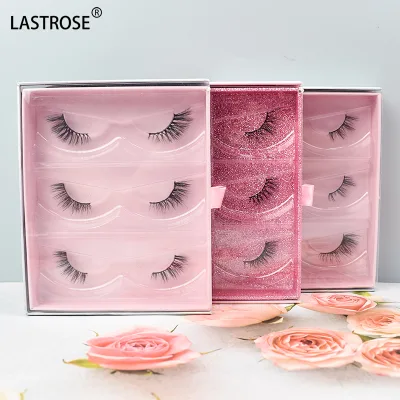
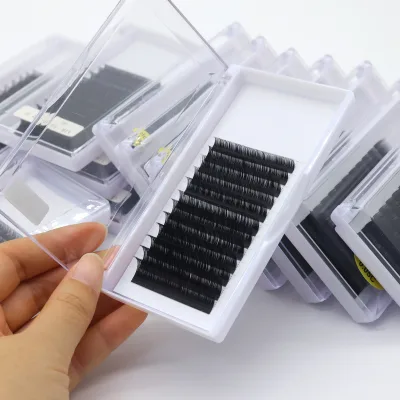
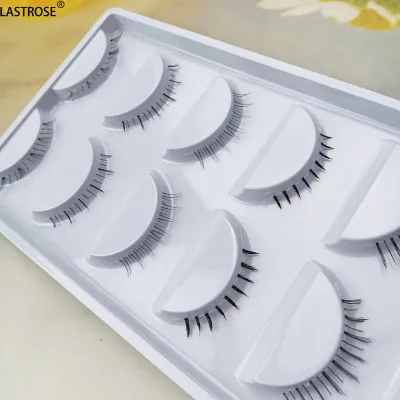
Packaging plays a dual role in logistics and marketing. The data outlines several packaging specifications, including "1 pair per case" or "4 pairs per case." The physical containers vary widely, offering choices such as "Plstick Case," "Customized Logo Magnet Box," "Round Box," "PVC Display Box," and "White Box." The origin of the products is primarily noted as "China," with a specific mention of "Qingdao" as a production hub. This location data is useful for logistics planning, as Qingdao is a major port city with established shipping infrastructure.
The packaging standards also emphasize efficiency. One attribute notes a "Reasonable package size save shipping for you," suggesting that suppliers are mindful of volumetric weight. Another standard specifies dimensions of 12 * 6 * 1.5cm, which serves as a benchmark for standard retail units. For buyers, this means that shipping costs can be optimized by selecting packaging that minimizes air space while protecting the delicate hand-made lashes. The option for "Customized Package Box" or "Regular Box" further allows for brand differentiation without compromising the structural integrity of the product.
Compliance, Certification, and Quality Assurance
In the beauty industry, compliance and quality assurance are non-negotiable. The provided data indicates that third-party inspections are a standard part of the procurement process. Suppliers are expected to facilitate inspections by recognized agencies such as SGS, ITS, and BV. The presence of these certifications, specifically noted as "SGS, ITS, BV test passed" for certain models like AFELEEL18, provides a baseline for safety and quality verification. Buyers should not assume all products automatically meet these standards but must request and verify these test reports for every batch.
The inspection process is described as being conducted "by Third Party Like SGS, Its, etc." This implies that the supplier is open to external validation, a positive indicator for B2B transactions. However, the data also lists "OEM Customized Logo Design" as an attribute, which means the final product may be branded by the buyer. In such cases, the buyer must ensure that the OEM process does not interfere with the original material safety certifications. The "Practice Eyelash" model suggests that some products may be intended for training or practice purposes, which might have different compliance requirements compared to retail-ready cosmetic products.
Quality control should extend beyond the initial inspection. The attribute "Reuseful: Yes (25 Times with Proper Care)" highlights the durability of the product, but this claim is contingent on proper handling. Buyers should verify the care instructions provided by the supplier to ensure that the 25-use claim is realistic. Additionally, the "Inspection" attribute suggests that quality checks are performed, but the specific metrics (e.g., lash shedding rate, adhesive bond strength) are not detailed in the source data. Therefore, buyers must define their own quality acceptance criteria during the negotiation phase.
Cost Drivers and Procurement Economics
Understanding the cost drivers for hand-made black flat lashes requires an analysis of the labor-intensive nature of the product. The "Hand Made" designation inherently suggests higher labor costs compared to fully automated production. This is reflected in the observed price range of 0.03 to 20.3 USD. The wide variance in pricing likely corresponds to the complexity of the design, the quality of the material (Fur vs. Synthetic), and the level of customization involved.
The Minimum Order Quantity (MOQ) is another critical economic factor. The observed MOQ range spans from 1 to 3500 units. This flexibility is beneficial for buyers at different stages of their business. New entrants or those testing the market can start with an MOQ of 1, while established brands can leverage higher volumes to negotiate better unit prices. However, buyers must be aware that lower MOQs often come with a higher per-unit cost due to the setup and labor costs associated with small-batch production.
Lead times and logistics are also influenced by the customization options. The "Customized Package Box" and "Customized Logo" options require additional production time for printing and assembly. The data mentions "Customized Package Box or DHL Box," indicating that shipping methods can be tailored. Buyers should factor in the time required for sample approval, especially since the "Customized Lashes" attribute notes that a sample must be provided. This sample phase can add to the overall lead time before mass production begins.
Typical Applications and Market Usage
The versatility of hand-made black flat lashes is evident in their diverse application scenarios. The product attributes list usage in "Ragdoll," "Television," "Emulation," "Festival," and "Daily" settings. This broad range suggests that these lashes are suitable for both professional entertainment industries and everyday consumer use. The "Television" and "Emulation" applications imply that the lashes are designed to look natural under high-definition cameras and stage lighting, a key requirement for the entertainment sector.
For the "Daily" use market, the lightweight nature (1-2g per pair) and the "Reuseful" capability (up to 25 times) are significant selling points. Consumers looking for long-term value will appreciate lashes that can be worn multiple times without losing their shape or flat profile. The "Make up" usage category further reinforces their role in the broader cosmetics industry. The "Mixed" color option and "Custom" color availability allow brands to cater to niche markets, such as festival goers who prefer bold looks or professionals who need specific shades for different skin tones.
Supplier Evaluation and Long-Term Procurement
When evaluating suppliers for hand-made black flat lashes, buyers should prioritize transparency and consistency. The presence of specific product models (e.g., SM4#, ST07#) and detailed packaging specifications indicates a supplier with a structured production line. However, the variation in attributes, such as "Fur" vs. "Synthetic Hair" and "Hand Made" vs. "Semi-Hand Made," requires careful vetting. Buyers must ensure that the supplier can consistently deliver the specific attributes requested, as the "Hand Made" process can introduce variability.
Long-term procurement considerations should focus on the relationship between the buyer and the supplier regarding customization and quality. The ability to provide samples for "Customized Lashes" is a strong indicator of a supplier's willingness to collaborate. However, buyers should establish clear protocols for sample approval to avoid delays. The "OEM Customized Logo Design" capability suggests that the supplier is equipped for branding partnerships, but the buyer must verify that the logo application does not compromise the lash quality or safety.
Finally, the "Reasonable package size" standard and the availability of third-party inspections provide a foundation for a sustainable supply chain. Buyers should aim to build partnerships with suppliers who demonstrate a commitment to quality through third-party testing and who offer flexible packaging solutions that reduce shipping costs. By focusing on these factors, buyers can secure a reliable supply of high-quality hand-made black flat lashes that meet both aesthetic and operational requirements.
Comparative Analysis of Product Attributes
To assist in decision-making, the following table summarizes the key attributes observed in the product data, highlighting the variations that buyers must consider during the sourcing process.
| Attribute Category | Observed Variations | Procurement Consideration |
|---|---|---|
| Material | Fur, Synthetic Hair | Verify material source and safety; Fur may require different care than synthetic. |
| Technics | Hand Made, Semi-Hand Made | "Hand Made" implies higher labor cost and uniqueness; "Semi-Hand Made" may offer consistency. |
| Size Range | 5-15mm, 8-15mm, 8-16mm, 9-14mm | Select based on target eye shape; ensure the "flat" profile is maintained across sizes. |
| Color | Black, Custom, Mixed | "Black" is standard; "Custom" requires sample approval; "Mixed" may suit festival markets. |
| Packaging | Plstick Case, Magnet Box, PVC Box, White Box | Choose based on brand image and shipping efficiency; "Reasonable package size" saves costs. |
| Certification | SGS, ITS, BV (Test Passed) | Verify specific test reports for each batch; do not assume all products are certified. |
| Reuseability | Yes (25 Times with Proper Care) | Confirm care instructions; durability claims depend on proper handling by the end user. |
| Origin | China, Qingdao | Factor in logistics and potential tariffs; Qingdao is a major shipping hub. |
This comparative analysis underscores the importance of detailed specification verification. The diversity in attributes means that a "one-size-fits-all" approach to sourcing is ineffective. Buyers must align their specific needs with the exact capabilities of the supplier, ensuring that the final product meets the desired standards for quality, aesthetics, and functionality. By adhering to these evidence-based guidelines, procurement professionals can navigate the complexities of the hand-made lash market with confidence and precision.
FAQs
What materials are used for hand made black flat lashes?
These lashes are primarily made from fur or synthetic hair. Buyers must distinguish between these options as they offer different textures and wearability profiles for specific aesthetic needs.
Can I customize the lashes with my own logo?
Yes, customization including customized logo design is available for these products. Buyers should provide a sample for verification to ensure the final design matches their brand identity requirements.
How many times can I reuse these hand made lashes?
The product is reusable up to 25 times with proper care. This durability claim depends on following specific handling instructions to maintain the lash shape and flat profile over multiple uses.
Which packaging options are available for bulk orders?
Packaging choices include plastic cases, magnet boxes, round boxes, and PVC display boxes. Suppliers offer options like one pair per case or four pairs per case to optimize shipping and storage.
What certifications do the suppliers provide for quality assurance?
Suppliers facilitate third-party inspections by agencies like SGS, ITS, and BV. Buyers should verify that specific batches have passed these tests before finalizing procurement agreements for safety compliance.
Where are these hand made black flat lashes manufactured?
The products originate from China, with Qingdao noted as a specific production hub. This location offers established shipping infrastructure for logistics planning and efficient delivery to international buyers.